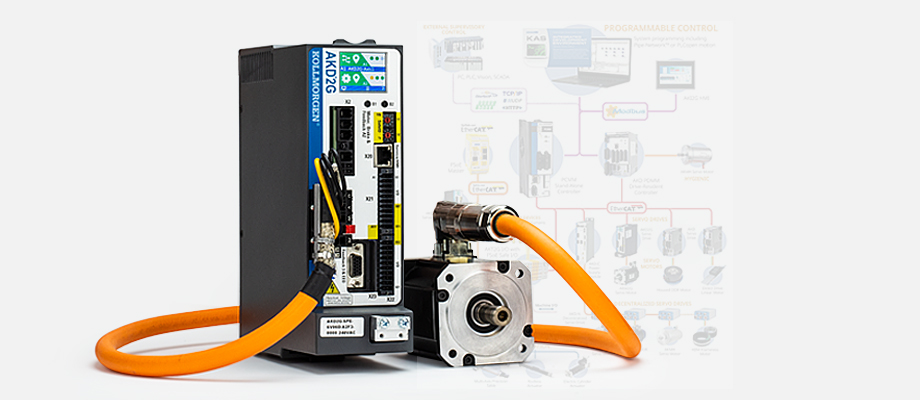
In its basic form, a servo system consists of an actuator (the muscle), a control device (the brain), and a feedback element (the senses). In the automation world, while the muscle can be a variety of mechanisms, it is most likely represented by a servo motor. The brain can also be represented by a variety of elements but is typically a motion controller or servo drive. The sense provides feedback information to the brain through a current sensor and/or an encoder, resolver, or even a vision system.
When the control device sends a signal to the actuator to move to a specific position, the actuator starts to move, and the feedback device signals back to the controller where and how fast the actuator is moving. The controller then reviews the feedback and determines if the motor has reached the commanded position. If not, the control device will continue to signal the actuator to move until it receives a signal from the feedback device that the motor has reached the desired position.
 The servo system operates much like the processes of the human body - a remarkable multi axis motion system of hundreds of muscles, multiple feedback devices, and a control system that makes swift adjustments. As an example, a baseball player steps up to the plate to bat and the brain analyzes the current situation, the number of players on base, the current number of outs, the position of the defense. The batter glances toward the third base coach and receives the signal to hit the ball (the image passes from the eyes to the brain). As the pitcher throws the ball, the batter anticipates the pitch, and contemplates where the ball will cross the plate. As the pitcher releases the ball, the batter’s eyes send information to the brain, the brain analyzes the ball’s flight, makes split second decisions, sends signals to multiple muscles, and coordinates the swing of the bat to precisely hit the ball. If the batter misses the ball, the brain analyzes the error to adjust for the next pitch. The human body, like a servo system, works in a coordinated dance of precision motion. The modern industrial servo system has advanced significantly and now includes complex controllers with multiple feedback devices and fast processors that make nanosecond decisions to perform the desired motion. A breakdown of a typical industrial servo system includes:
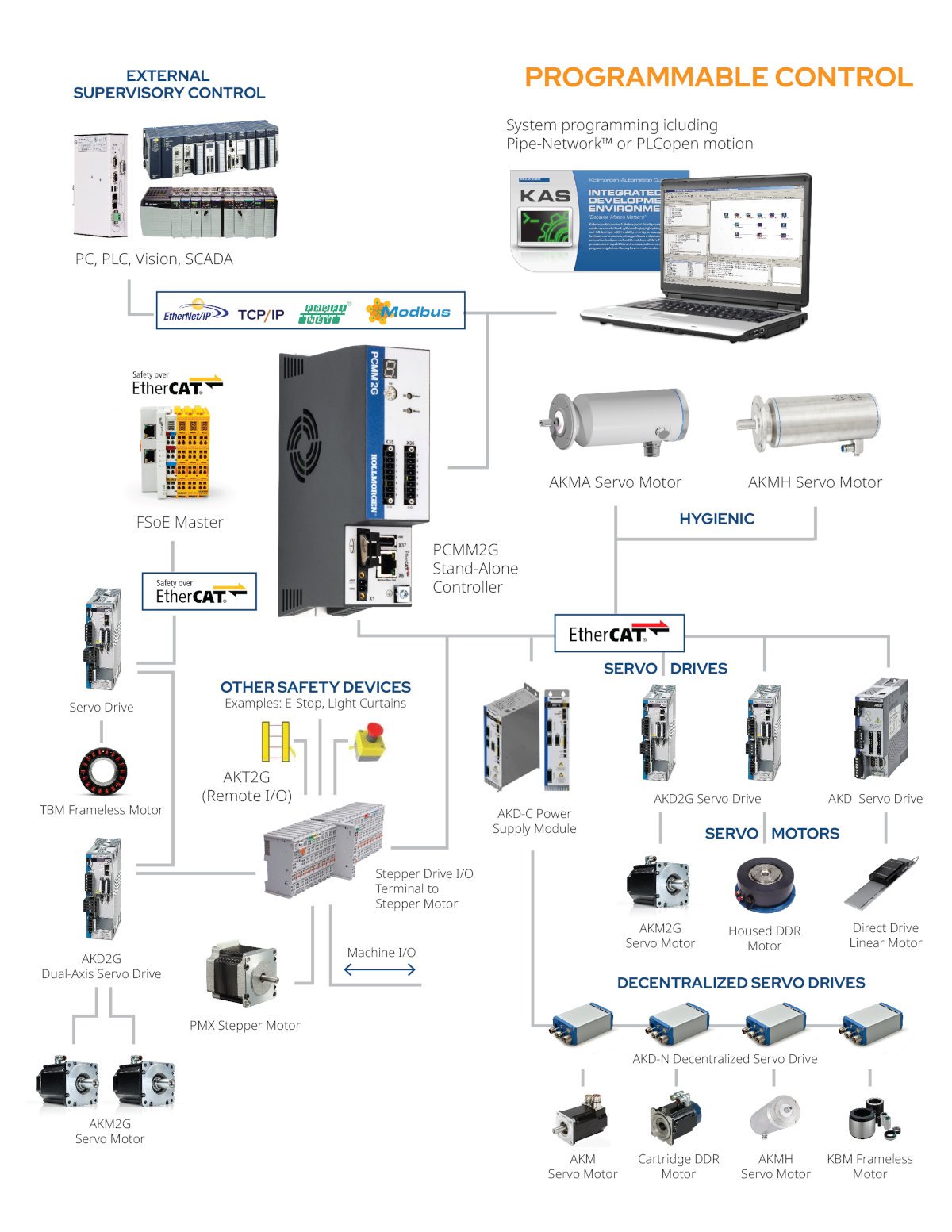
- Servo motor – the muscle of the system, available in a variety of technologies including brush or brushless, housed or frameless, and linear or rotary. The motor produces the torque required to accelerate and move the load.
- Servo drive – this can be either the brain of the system or a portion of the brain. Simple servo drives may control torque and/or speed, while higher level servo drives offer additional features and can be configured as a positioner with programming capabilities. A drive or controller, matched to the servo motor, controls the voltage and current the motor receives.
- Servo controller – the brain of the system, utilizes a programming environment to allow a variety of options for machine control, operation of inputs and outputs, and is interconnected with a type of graphical user interface. Servo controllers can be standalone or integrated with servo drives.
- Feedback – the senses of the system is typically integrated into the servo motor. The feedback element can consist of an encoder, resolver, linear feedback device, tachometer, etc. Sophisticated control systems may include more advanced forms of feedback such as a vision system.
- Cabling – The servo system is interconnected so the feedback, communication, and power feedback cabling becomes the nervous system that connects the brain, muscles, and senses together.
Selection of the right set of components for a servo system demands a careful analysis of the system performance requirements. The amount of “muscle” required will determine the size of the servo motor, which in turn affects the selection of the servo drive. The precision of the application plays a role in feedback selection, specifically for the type and resolution of the feedback device. The amount of coordination between other devices in the system, along with the response required, will determine the level of controller required.
Putting this all together can be a considerable task. Working with motion control experts like Kollmorgen makes selecting a servo system easier and faster, resulting in an optimal system for the application.