Machines are becoming faster, more precise and more interconnected. As complexity evolves, so does how we measure performance. Instead of focusing on isolated parts, performance now depends on how the entire motion system behaves under real conditions, including speed, load, variability and synchronization.
This shift is what makes a mechatronic approach valuable. It means designing systems where mechanical, electrical and control disciplines work together from the beginning. With this lens, engineers move beyond isolated optimization and build motion systems that perform consistently from commissioning through operation.
What mechatronics design means for modern motion systems
At its core, mechatronics design brings together mechanical structures, electrical components and control engineering into a single system. The motor, drive, controller and software act as a single organism. Each discipline influences how the machine moves, but performance depends on how they interact.
Mechanical design defines stiffness, inertia and load dynamics. Electrical systems determine how power is delivered and converted. Control engineering governs how motion is commanded and stabilized. When combined, their interaction is the primary driver of performance.
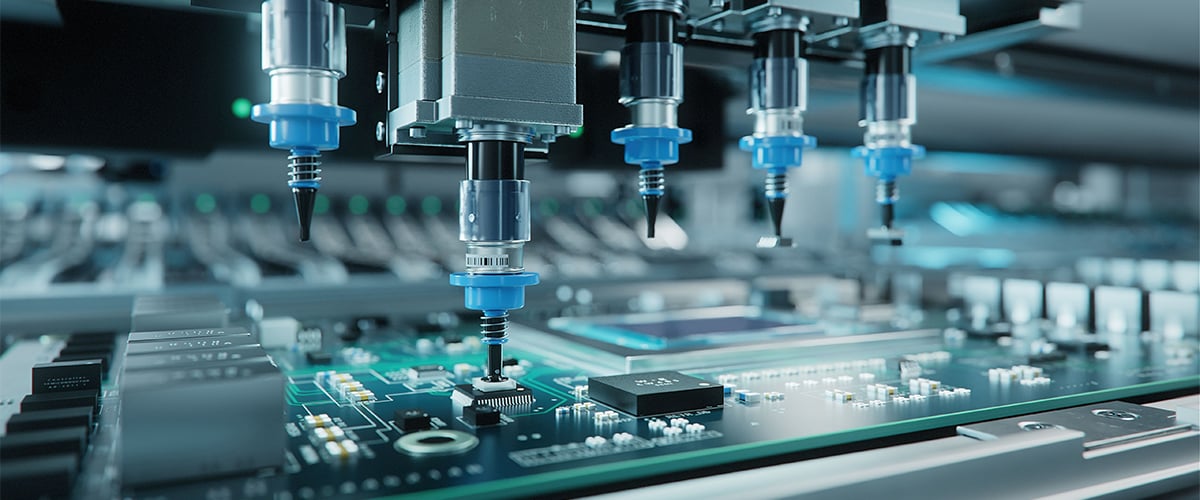
In applications such as packaging systems or precision assembly, these interactions determine whether motion remains stable at speed or becomes sensitive to variation. Designing for interaction from the outset is key.
The limits of component-level design
Traditional motion system design often focuses on optimizing individual components. This might mean selecting a higher-torque motor, a faster drive or a more rigid structure. These decisions matter, but they don’t guarantee system-level performance.
In many cases, optimizing one element can bring about new challenges elsewhere. For example, a high-performance servo system can still underperform if mechanical compliance introduces vibration, and a precisely machined structure can lose accuracy if control loops are not properly tuned.
As motion systems become more complex, especially in multi-axis applications, these interactions become more visible. Performance depends less on peak specifications and more on how well the system maintains motion quality across all axes and operating conditions.
Designing integrated motion systems
An integrated motion system brings motors, drives, feedback and control into a coordinated architecture—moving from selecting components to shaping system behavior.
With this approach, axes are engineered to work together. They are synchronized to follow precise motion paths, respond to disturbances, and remain in alignment under dynamic loads. Feedback and control are also applied system-wide for a consistent response.
Control engineering allows this behavior. It defines how the system reacts to commands and disturbances and how motion stays stable within the limits of system dynamics and control bandwidth. Modern control systems regularly monitor system performance to pinpoint early signs of variation and adjust in real time.
This level of integration reduces the need to manually align and tune individual components. Instead, engineers can design and optimize the system as a whole for faster commissioning and more predictable performance.
From manual input to automated accuracy
For many years, setting up a servo system meant doing everything manually. Engineers entered motor parameters into the drive by hand, referenced lookup tables, and hoped nothing was mistyped. A misplaced decimal point could cause a motor to overheat or damage itself. Small errors meant poor performance, instability, or unexpected behavior before the machine ever ran a real cycle.
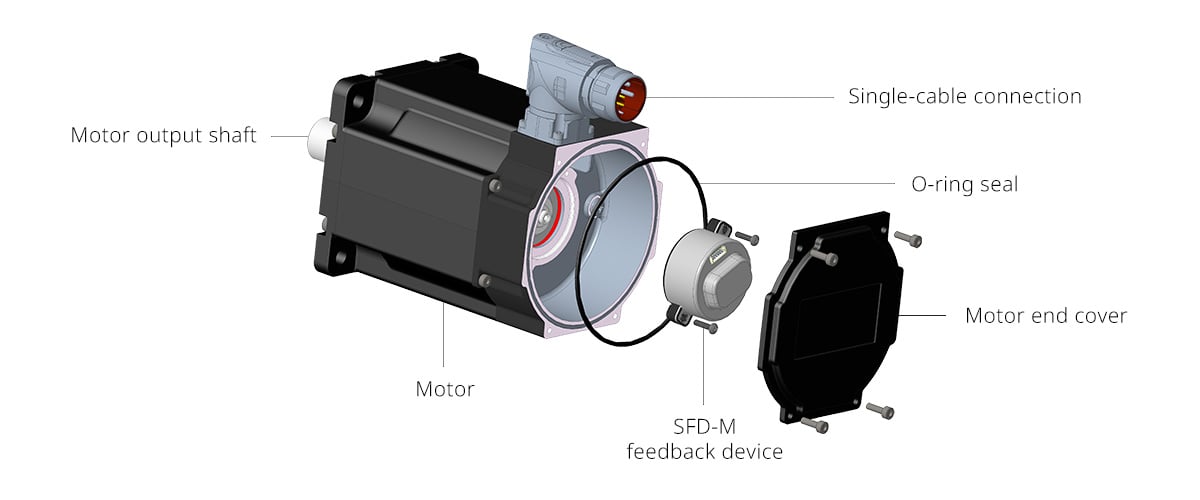
Modern systems address this directly. Kollmorgen's SFD-M smart feedback device stores motor data in the feedback device itself, enabling automatic configuration between motor and drive—loading the correct parameters for torque, current and speed control without slow or error-prone manual entry. The system performs as intended from the first test move.
This is the first stage of mechatronic integration in practice: enabling key elements to cooperate automatically. It shifts engineering focus from configuration to machine dynamics.
Beyond setup, modern drives are designed to operate across multiple industrial networks by default. OEMs often have existing automation environments and communication protocols they're committed to. Protocol-agnostic drives remove that barrier, while fully integrated environments like the Kollmorgen Automation Suite (KAS) bring motion control, PLC logic, safety and visualization into a single workspace. Essentially, mechanical intent and digital control are in one place.
Validating motion performance across the machine lifecycle
Designing an integrated motion system is only part of the challenge. Engineers must also ensure that performance holds under real conditions before the machine is built, during commissioning, and throughout operation and maintenance.
Digital twin and simulation technology help address this early. By combining mechanical models with drive characteristics and control behavior, engineers can model system response under different conditions. This helps identify tradeoffs early and reduces the need for repeated physical testing during development. While virtual tools don’t replace physical testing, they do help improve system understanding before deployment.
Once operational, a unified system also simplifies maintenance and fault tracing. When components from multiple vendors are stitched together, identifying the source of a fault becomes time-consuming and uncertain. A unified system removes that ambiguity. Issues are easier to trace and resolve, and upgrades or replacements are more straightforward because new components can be validated without redesigning the surrounding system.
This matters especially in globalized engineering environments where a machine may be designed in one region, assembled in another and serviced in a third. Integrated platforms and shared digital environments help maintain performance and consistency across those boundaries, ensuring the design behaves the same no matter where it's built or operated.
Driving motion performance in the real world
Even with the right design and validation approach, performance is ultimately proven in application. Understanding how motion systems behave in specific use cases—from packaging lines to robotics to precision assembly—helps ensure that design decisions translate into real-world performance.
Ultimately, the value of mechatronics is in what happens when all elements come together. Machines built as unified systems are easier to develop, tune and maintain. They run more smoothly, adapt more readily to future needs, and deliver greater long-term reliability.
Contact us today to learn more about applying a mechatronic approach to the design of your motion systems.