Better Humanoid Motion, From Design to Delivery

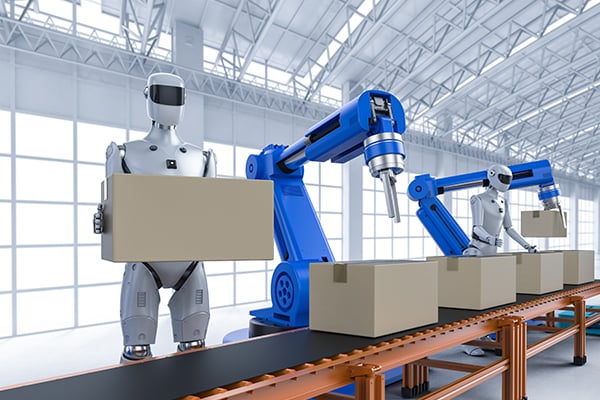
Humanoid robots must navigate unpredictable terrain, carrying their own power source and the combined weight of their actuators and other components — while manipulating objects ranging from lightweight, precision tools to large, heavy packages. Performing tasks with human-like dexterity requires precise motion of interdependent robotic joints coordinated across a robust skeletal structure.

Frameless motors designed specifically for the torque, acceleration, size and weight requirements of robotic joints are key to achieving the necessary kinematic performance and energy efficiency. Learn how to specify these motors using a system-level strategy while ensuring the manufacturability you need to progress smoothly from prototype to full production.
Read the White Paper

Image 1

Image 2

Lightweight, Torque-Dense, Robot-Ready Motion

To design battery-operated humanoids that reliably carry their own weight while performing heavy work for extended periods of time, you need highly responsive and precise frameless servo motors that deliver all the required torque across a wide speed range.

But that’s not all. To enable robotic joints that operate at a human scale, in the real world, servo motors must deliver exceptional performance in a package that minimizes size and weight, while maximizing power at an affordable cost. Learn how to identify the unique challenges of humanoid motion and how to solve them with motors designed to be robot ready.

Read the Blog

Motion Control Fundamentals for Humanoids & Exoskeletons

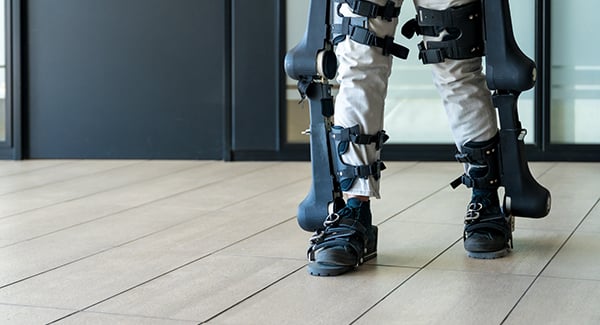
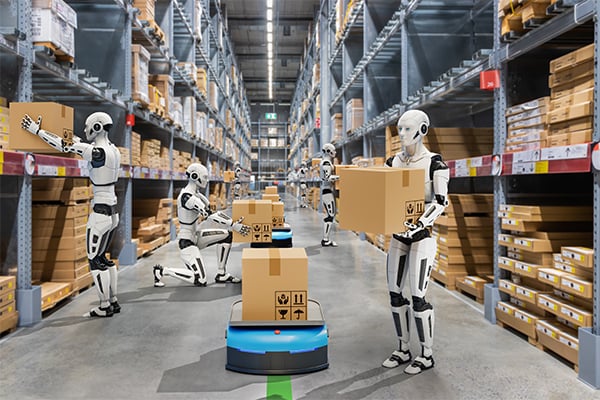
As humanoid technology matures, established robotics companies and startups see endless opportunities for replicating and improving upon human capabilities in warehouse logistics, healthcare, manufacturing, construction, service industries and more.

To win in these emerging humanoid markets, robot engineers need to address issues of performance, cost and scalability simultaneously. Learn how to design motion for humanoids that perform optimally not only in prototype but also in the commercial arena.

Join the Training Session

Image 3

TBM Series Medium Image

TBM Series Frameless >

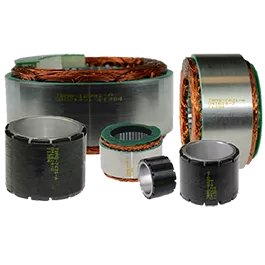
Our TBM series provides direct drive frameless motors designed to be directly embedded in the mechanical structure of your systems, minimizing weight, size and inertia without sacrificing performance.

Kollmorgen TBM2G Frameless Motor

TBM2G Series Frameless >

These next-generation frameless motors deliver high torque density for your most compact, lightest electromagnetic package, standard sizing for harmonic gearing, and scalable design to keep you on top of your global production needs.

Related Resources

Robotic Arm Actuators for Articulated Motion

Optimizing Robotic Arm Actuators for Articulated Motion >

Why robotic arm actuator performance depends on more than motor selection, and how to optimize performance at the system level.
Robotic arm application

Integrating Frameless BLDC Motors for Next-Generation Robotics Innovation >

RobCo scaled its modular robotics platform using TBM2G frameless torque motors for robot joints, delivering high torque and speed in a compact design.
Explosion-proof technology helps create a safety shield for heavy-duty AGVs 

Explosion-proof technology helps create a safety shield for heavy-duty AGVs >

The AKME servo motor series with ATEX certification enables heavy-duty AGV development for hazardous locations in chemical, painting, polishing and specialized facilities.
Achieving Precision and Higher Payloads with Compact Robotic Actuators

Achieving Precision and Higher Payloads with Compact Robotic Actuators >

HEBI Robotics boosts compact actuator torque and accuracy for industrial inspection and maintenance applications with Kollmorgen TBM2G frameless servo motors.
Designing Field Robots for Harsh and Unpredictable Environments

Designing Field Robots for Harsh and Unpredictable Environments >

This session explores how innovative technologies from Kollmorgen and Regal Rexnord’s broad portfolio of motion control technologies can help engineers meet the rigorous demands of field robotics.
Motion Control Principles for Scalable Humanoid Robotics

Motion Control Principles for Scalable Humanoid Robotics >

As humanoid robotics gain momentum across industries—from logistics and manufacturing to healthcare and public safety—the demand for precise, efficient, and scalable motion control solutions is accelerating. Engineers face complex challenges in…
How Kollmorgen Motion System Powers a Cable Robot to Triple Throughput

How Kollmorgen Motion System Powers a Cable Robot to Triple Throughput >

Learn why Rbot9 specified AKM2G servo motors and AKD servo drives to maximize the payload capacity, speed and vertical-load safety of its massive, suspended-cable robot.
How to Select the Right Motor for Robotic Applications to Reduce Cost and Time to Market

How to Select the Right Motor for Robotic Applications to Reduce Cost and Time to Market >

Understanding the physics and optimization techniques of electric motors— including slotted, slotless, and frameless designs— is essential for enhancing value and performance. In this webinar, we’ll discuss the effects of pole count, winding…

Exoskeletons at Scale: Accelerating the Transition from R&D to Full-rate Production >

The exoskeleton market is still in its infancy — but evolving quickly and ripe with opportunity. It’s a double-edged sword for OEMs who must identify the most impactful applications and crack the code on full-scale production, which presents a new…