Stepper motors have earned their place in motion control. They are reliable, cost-effective and well-suited to a wide range of machine axes. For point-to-point moves with predictable loads, they remain a smart engineering choice.
So, when should you convert from a stepper motor to a servo motor? The answer is when your application starts to exceed what a stepper motor can reliably deliver. The demands placed on modern machines have changed. Robotics and intralogistics applications now ask more of every axis: faster cycle times, tighter coordination and consistent performance under variable loads. As those demands increase, many designers debate the decision to switch to a servo motor.
Let's explore when the stepper-to-servo transition makes sense and what to look for as you make the move.
Are you pushing stepper motor limitations?
Understanding how a stepper works and where it runs out of headroom helps you spot the transition point before it costs you uptime or repeatability. Three stepper motor limitations tend to surface as performance demands rise.
- Torque falls off at higher speeds.
A stepper typically begins losing usable torque starting around 1,000 RPM, driven by winding inductance and core losses. Below that range, steppers deliver strong torque in a compact package. Push past it, and the available torque drops quickly, right when many applications need it most. - Constant-current drives generate heat regardless of load.
A stepper draws full current whether the application needs it or not. That creates two inefficiencies. First is thermal, because wasted energy turns into heat. Next is electrical, because you are consuming more power than the work requires. A servo, by contrast, draws only the current it needs. - Open-loop architecture can’t catch missed steps.
A traditional open-loop stepper sends pulses and assumes the motor follows them. Under variable or dynamic loads, missed steps go undetected and uncorrected. There are closed-loop steppers now that add an encoder to verify position and correct missed steps. However, it still doesn't compare to the dynamic response of a true closed-loop servo motor.
How do affordable servo motors close the cost gap?
The old assumption that servos are over-engineered and cost-prohibitive for mid-tier axes no longer holds. The economics of motion control have shifted, and right-sized servo platforms can now provide more value. They deliver higher performance, reduce integration complexity and utilize standard mounting and modern industrial connectivity—all while competing on price. The old assumption that servos are over-engineered and cost-prohibitive for mid-tier axes no longer holds. The economics of motion control have shifted, and right-sized servo platforms can now provide more value. They deliver higher performance, reduce integration complexity and utilize standard mounting and modern industrial connectivity—all while competing on price.
Looking beyond the purchase price
Typically, a stepper may appear more cost-effective on the surface. But once you account for oversizing to reach peak torque, higher operating temperatures, energy losses and the impact on long-term operating costs, the margin between the two technologies closes. This is especially true when you are trying to match servo-level performance.
Why Kollmorgen Essentials™ servo motors check all the boxes
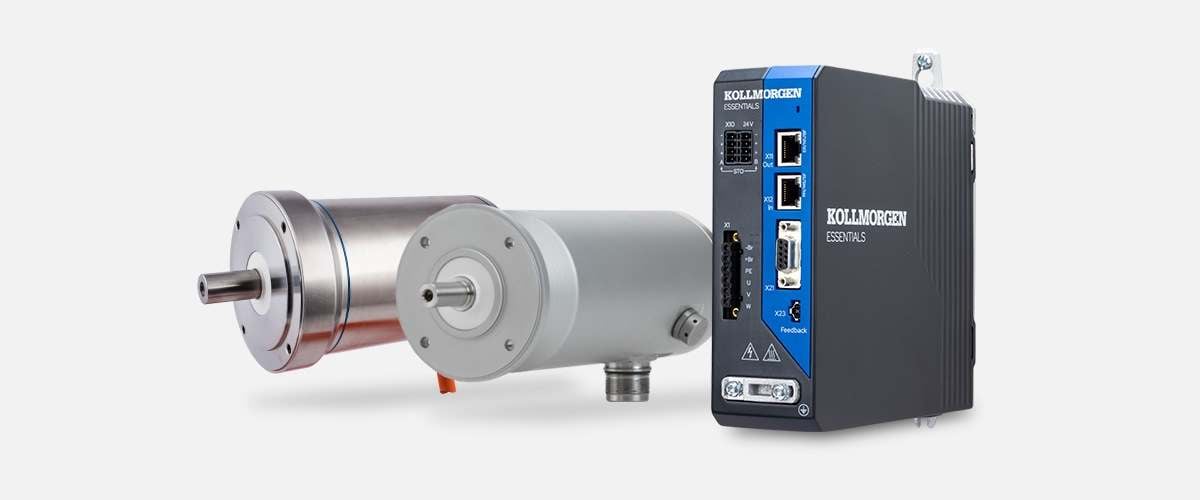
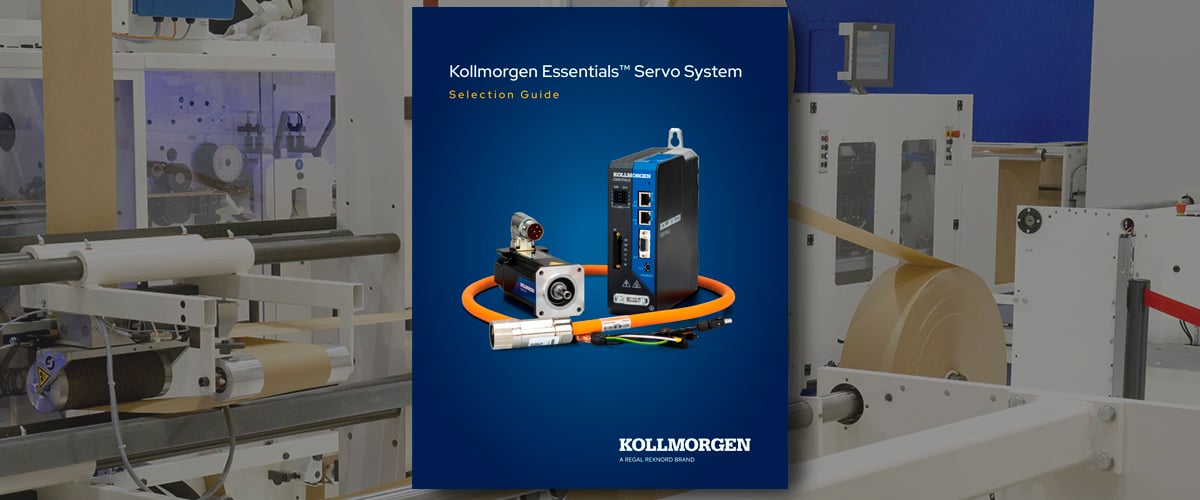
The Kollmorgen Essentials™ Motion System is an ideal, practical bridge for cost-sensitive axes requiring closed-loop performance. Essentials servo motors deliver true closed-loop servo performance with high-resolution absolute feedback and multi-axis synchronization capabilities, while helping remove many of the cost and complexity barriers that have traditionally limited servo adoption.
- Servo performance at a stepper-friendly price. Kollmorgen Essentials provides the accuracy, responsiveness and reliability of a true servo system while delivering approximately 30% cost savings versus premium servo tiers. This helps close the gap between stepper and servo solutions.
- Simplified installation and commissioning. A pre-matched motor, drive and single-cable connection reduces wiring and setup complexity. Automatic motor recognition and the Express Setup workflow in Kollmorgen WorkBench help get machines running quickly in under 20 minutes, even for teams with limited servo experience.
- Absolute feedback included as standard. Every motor includes integrated SFD-M multi-turn absolute feedback, eliminating battery maintenance while retaining position information through power cycles.
- Ready when you need it. One of the strongest arguments for stepper systems has always been availability and delivery speed. Kollmorgen Essentials matches that standard. With stocked inventory, short lead times and support for EtherCAT®, EtherNet/IP™ and PROFINET®, Kollmorgen Essentials makes it easier to standardize on servo technology across a wide range of machine designs.
For OEM machine builders who have deferred the servo transition because the numbers never quite worked out, Kollmorgen Essentials changes the calculation.
5 signals that it’s time to convert from stepper motor to servo
No single symptom forces a switch. More often, several of these signals appear together and point to the same conclusion.
Signal 1: Speed and torque demands are rising
Servo motors achieve speeds two to four times higher than steppers while holding consistent torque across a much wider range. As your speed and torque requirements increase, a stepper's usable performance window narrows. To compensate, machine builders often oversize the motor to maintain torque at higher speeds, increasing heat generation and energy consumption. When oversizing becomes necessary to meet your performance targets, it may be time to evaluate a servo motor that can deliver the required speed and torque more efficiently.
Signal 2: You need true closed-loop feedback
When quality, precision or process control depend on knowing the true position of the axis, open-loop operation is no longer enough. If you have already bolted an encoder onto a stepper for peace of mind, the architecture has effectively told you it is time to evaluate a true closed-loop servo.
Signal 3: Running at high duty cycles or peak operating points
A stepper must live within its continuous torque envelope. It has no short-term reserve to draw on, which can accelerate thermal degradation and constrain machine uptime over continuous-duty applications.
A servo, on the other hand, can deliver peak torque for brief 1- to 5-second bursts and then return to continuous operation, all while staying within thermal limits. To do this with a stepper, you must oversize the motor so the peak requirement fits inside its continuous rating. A servo can instead be optimized for the actual load profile, often resulting in smaller, lighter installs and more flexibility when machine space is limited.
Signal 4: Inertia ratios and variable loads
Steppers perform best with predictable loads and modest inertia ratios. As load variability increases—direction reversals, changing payloads, higher inertia—open-loop systems lose repeatability and risk lost motion. Servos can handle inertia ratios up to approximately 100x rotor inertia with the right tuning and coupling, correcting in real time as conditions change.
Signal 5: Scaling to multi-axis coordination
Synchronizing multiple steppers across a machine adds coordination overhead and failure points. Steppers are limited to point-to-point moves with only pseudo-coordination between axes. When you need tight, synchronized motion across several axes, servo-native architectures with modern industrial protocols carry that load with far less integration effort.
Step up to servo with confidence
The stepper-to-servo transition is rarely triggered by one failure. It shows up as a pattern: torque dropping off as speed rises, oversizing to cover peak demand and repeatability slipping under variable loads. When those signals stack up, servo becomes the better-fit technology—and affordable servo motors become the right-size solution.
If you're ready to explore making the move to a servo system, our motion experts are here to help size the right solution for your machine.
BONUS: Frequently asked questions
-
What's the main difference between a stepper and a servo motor?
-
Stepper vs. Servo has always been a big debate. In short, a stepper typically runs open-loop, moving in fixed steps and assuming it reached the commanded position. A servo runs closed-loop, continuously checking and correcting position, speed and torque while the motion happens. That feedback gives a servo stronger dynamic response and a peak operating zone the stepper does not have.
-
Are servo motors more expensive than stepper motors?
-
A stepper often appears less expensive based on unit price alone. But once you factor in oversizing, energy inefficiencies and downtime, the gap narrows. Affordable servo systems have further closed it, and the total cost of ownership frequently favors servo in demanding applications.
-
Where do stepper motors still make sense?
-
Steppers remain an excellent fit for simple, open-close point-to-point motion with predictable loads—think pumps and valves. In those applications, they are reliable, accurate and hard to beat for their value.