Motion technology is the physical execution layer in aerospace and defense. It’s the motors and actuators that turn AI decisions, autonomous behaviors, and software-defined commands into operational reality. Without the right foundation from the start, programs can't scale to meet growing defense demand. But why does this matter?
For decades, competitive advantage in aerospace and defense has depended on delivering the most capable system at the right cost and on schedule. That hasn’t changed, but the demands are intensifying. As threats evolve and development cycles accelerate, customers must deliver highly sophisticated systems faster than ever.
While AI and software are leading the charge, the advantage only becomes real when the system can act on it. Customers need the confidence that these systems can be produced reliable at rate and sustained under pressure.
Key takeaways
- Motion technology is the execution layer that turns AI, autonomy, and software-defined defense into mission effect.
- Aerospace and defense innovation requires scalable, producible capability across missiles, unmanned systems, hypersonics, space, and more.
- Modern platforms demand compact, rugged motion systems optimized for SWaP-C, precision, thermal performance and survivability.
- In aerospace and defense, the ability to prototype quickly and scale reliably is becoming as strategic as the technology itself.
Why scalability is now the defining challenge in aerospace and defense
The defense department is putting greater emphasis on fielding new capabilities at speed and scale. In late 2025, the Pentagon narrowed its 14 Critical Technology Areas to six. Two explicitly include "scaled" in the name — Scaled Directed Energy and Scaled Hypersonics — reinforcing the shift toward technologies ready for mass production.
Speed is part of that scale equation. Compressed development timelines and new acquisition pathways are making it easier for commercial and nontraditional defense companies to step in. These entrants bring faster, iterative development models, while established primes operate on complex, decades-long program cycles. Both require motion control suppliers who can match their pace.
At the same time, technologies that once advanced largely within their own domains are converging. AI is enabling more autonomous platforms. Advanced sensing and communications are supporting collaborative systems. New manufacturing approaches help produce greater volumes. The opportunity is significant, but so is the challenge. Innovation has to be sustainable beyond the prototype.
This is especially visible in hyper-growth areas like unmanned and collaborative platforms, the proliferation of LEO satellite production and the urgent need to replenish missile inventories. As demands accelerate, the challenge extends deep into the supply chain. Scaling the platform means scaling every critical technology within it, including motion control. That requires suppliers who can match the pace and deliver consistently as programs evolve.
Which technologies are reshaping future missions?
The next wave of aerospace and defense innovation is taking shape where software and hardware converge. AI, autonomy, advanced sensing, communications and manufacturing are advancing together, creating capabilities that would not be possible in isolation. As that convergence accelerates, the challenge is increasingly physical: building motion systems that can keep pace with what software now makes possible.
Autonomous and unmanned systems
Autonomy is moving quickly from individual platforms to collaborative systems. Small UAS and loitering munitions are being joined by autonomous swarms and Collaborative Combat Aircraft (CCA), creating demand for capable systems at much greater volumes. These attritable, high-volume platforms change the motion equation, emphasizing repeatable designs that integrate efficiently and produce reliably at scale.
Hypersonics
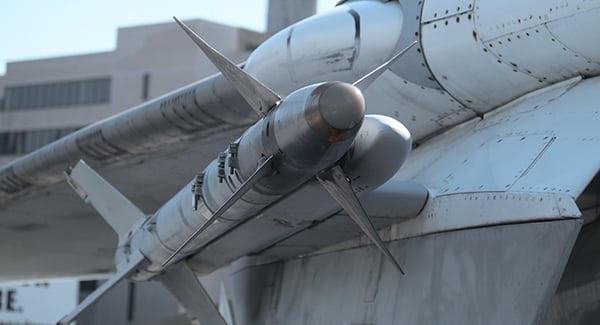
At Mach 5 and above, nearly every motion challenge gets harder. Sustained hypersonic flight subjects fin actuation and thrust-vector control to extreme thermal, shock, and vibration conditions, all while demanding precise control authority. The Air Force's FY2027 budget request includes $346 million for hypersonic weapons prototyping, signaling continued investment as these technologies mature. The engineering challenge is no longer simply about accuracy. It is maintaining that accuracy through some of the toughest conditions in the defense mission set.
Advanced and additive manufacturing
How defense systems are built is changing alongside what they can do. Automation, additive manufacturing, digital production tools and advanced inspection enable more flexible, distributed manufacturing networks that can speed development and expand capacity. But it cannot come at the expense of quality. The real win is having disciplined quality systems in place—and standards behind them—to maintain repeatability and trust as you speed up and scale.
AI integration
AI is moving deeper into the mission. Decisions and responses are happening in real time. But faster intelligence creates a corresponding demand on the hardware. A command to slew a sensor, steer a missile, or stabilize a laser still has to be executed through a motor or actuator. As AI shortens the time between sensing and decision, motion has to shorten the time between decision and action.
New space and LEO constellations
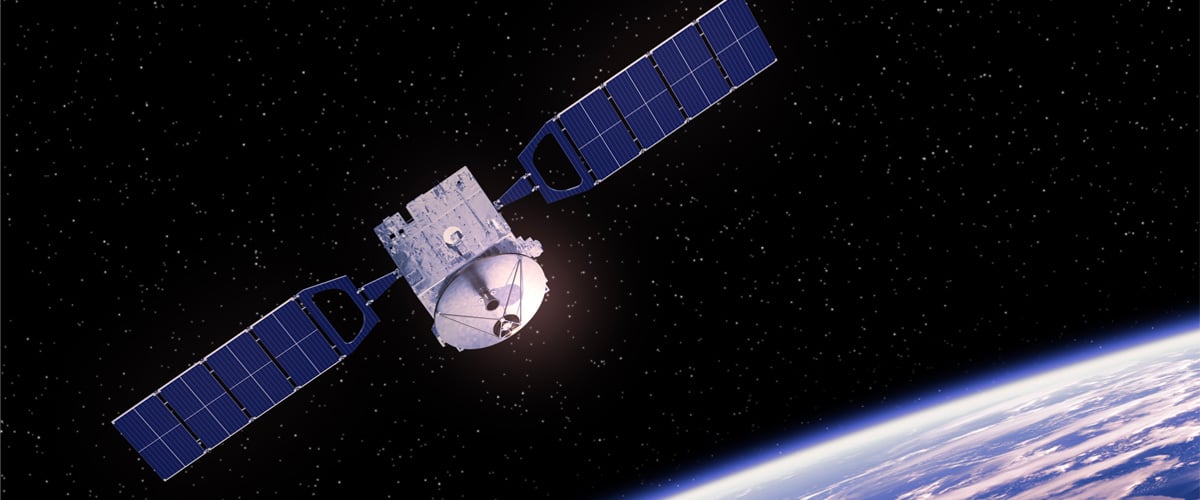
Space is shifting from a small number of highly specialized assets toward proliferated architectures built around larger constellations. Proposed multi-layer missile defense systems such as Golden Dome illustrate the scale of that shift, with concepts contemplating thousands of LEO satellites. That changes the equation for satellite pointing, stabilization and optics. Ultra-low-jitter precision is still required, but it must now be delivered repeatedly, at production volumes defense space has rarely seen before.
Counter-UAS
Counter-unmanned aerial systems (C-UAS) now operate as part of a multi-layer defense system or a standalone mission with a dedicated task force and acquisition tranche. The systems span kinetic interceptors, electronic warfare and directed energy. Motion is central to each layer, from radar pedestals and tracking stations that hold target lock to fast-slewing gimbals that must move quickly and settle precisely. When threats arrive in numbers, the system must identify and engage each one in seconds.
What aerospace and defense technologies demand from motion systems
As missions become more capable, the margin for motion error shrinks. Motion systems must deliver the required performance within smaller size envelopes, harsher environments and faster development cycles. The exact constraints vary by application, but the need for precision motion remains constant. Here’s how each introduces specific engineering challenges and what that means for their motion requirements.
| Application | Engineering Challenge | Motion Requirements |
|
Missiles & Guided Munitions
|
Extreme shock, vibration and temperature combined with smaller size envelopes | High torque density, survivability, sub-arcminute guidance accuracy, extreme-temperature tolerance |
| Space & LEO constellations | Extreme shock, vacuum, radiation and limited thermal dissipation across increasingly high-volume architectures | Radiation and vacuum tolerance, NASA outgassing compliance, thermal management without convection |
| Unmanned Systems | Tight SWaP-C budgets combined with growing production volumes | Compact, power-dense motion, frameless embedded motors, redundancy and fault tolerance, scalable production volume |
|
Counter-UAS
|
Targets that can appear and maneuver quickly, often in numbers | Low latency and high bandwidth, fast-slewing gimbals, rapid settling, weapon-platform actuation and sustained target-lock stability |
|
Hypersonics
|
Extreme thermal, shock and vibration loads at Mach 5+ | Survivability, precise fin and thrust-vector control authority at Mach 5+ |
Why a motion partner is a strategic defense decision
As capability migrates into software, the value of a partner who understands the full motion stack grows. Suppliers who design for modularity and open interfaces make open-architecture defense systems physically real. The Modular Open Systems Approach, now required by US law for major defense programs, depends on components that can be added, replaced and reconfigured across a platform's lifecycle. Motion is one of those components.
The bottleneck is no longer software or ideas. It is producing ruggedized, precise, power-dense motion at the volume missions demand. Meeting that demand takes more than a single motor supplier. It takes a motion partner with the breadth to solve the whole motion problem and the manufacturing reach to sustain it.
As part of Regal Rexnord Aerospace & Defense Solutions, Kollmorgen brings over a century of aerospace and defense motion expertise. From the Abrams tank and PAC-3 missiles to the MQ-9 Reaper and Mars Rover missions, our solutions support global production programs through decades of operation. For an OEM, this means a single supplier spanning the full motion portfolio, including frameless precision motors and servo systems, miniature motors, ball and lead screws, resolvers, magnetics, bearings, gears, clutches and brakes. Backing that breadth are 14 global AS9100-certified manufacturing facilities and deep experience meeting stringent defense standards and compliance across regions.
Kollmorgen motion experts work side by side with client teams from initial discussion through prototyping to full-rate production, matching field-proven technologies to what the mission actually requires. Teams can start with an established platform, draw from thousands of standard modifications or develop a purpose-built solution when the project demands it. This provides a scalable path from conventional prototype motors to fully space-rated or mission-hardened production configurations.
The road ahead for aerospace and defense innovation
When time-to-replenish is a strategic metric, your technical advantage matters only if you can produce, certify, deliver, and sustain it at the rate readiness demands. As aerospace and defense grows more software-defined, more contested, and more focused on scale, the organizations that treat motion as a strategic capability rather than a commodity component will be the ones that turn ambition into deployed, sustained mission advantage.
Learn how Kollmorgen's aerospace and defense experts can pressure-test requirements early, before the gap between what can be designed and what can be produced becomes a program risk.
Frequently Asked Questions
What is the execution layer in defense systems?
Motion technology is the physical execution layer—the motors, actuators, and gimbals that translate AI decisions and software commands into precise, real-world action. It is the layer where autonomy and open-architecture software become mission effect.
Why is motion technology important in aerospace and defense innovation?
Defense capability is increasingly defined in software, but every targeting decision, autonomous maneuver and satellite pointing correction still depends on a physical motion system to execute. Motion technology is what makes software-defined defense operationally real.
What does SWaP-C mean in defense engineering?
SWaP-C stands for size, weight, power, and cost. It is the governing design trade-off for defense platforms requiring maximum performance in the most compact, lightweight, power-efficient, and affordable form factor possible.
How does motion control support hypersonic flight?
Hypersonic vehicles rely on fin actuation and thrust-vector control to maneuver at Mach 5 and above. Motion systems must maintain precise control authority while surviving extreme thermal, shock and vibration conditions in some of the harshest environments in the defense mission set.
Who should consider a specialized motion partner for aerospace and defense programs?
Both commercial new entrants and traditional defense primes benefit from a specialized motion partner. New entrants need rapid prototyping and short design cycles, while primes need scaled production, compliance, and decades-long sustainment. A partner capable of serving both reduces program risk across the full acquisition spectrum.