The electrification of modern manufacturing has fundamentally transformed machine automation, making basic movements far more reliable and highly controllable. But as production demands increase, the challenge shifts from moving an individual axis to managing motion across the entire production cell as a fully integrated, multi-axis orchestration layer.
Configuring individual motors and drives is a baseline capability. The complexity kicks in when you start scaling and coordinating these components within larger host platforms. Modern servo motion control systems now must remain synchronized, dynamic and hold stable under real production loads. All without burying teams in programming overhead or introducing instability at high speeds.
This article breaks down how to define, coordinate and sustain motion across the full production cell for maximum reliability and scalability.
The true complexity of multi-axis motion
Let's start at the foundation. Motion systems are typically defined by the host PLC motion control environment selected for the factory floor, whether that environment is based on Rockwell, Siemens or another platform. Once that framework is established, all motion components (motor, drive, controller and feedback device) must seamlessly integrate and communicate within it. At this point, the task moves from making a motor turn to ensuring compatibility, communication and coordination across a unified architecture.
Commanding a load from point A to point B is relatively straightforward. Managing the nuances of that movement is much harder. Acceleration and deceleration must remain controlled. Settling time must stay low. Motion needs to remain repeatable under heavy loads.
As more axes, conveyors, sensors and downstream processes join the equation, maintaining that performance becomes increasingly difficult. Systems that appear smooth at lower speeds can quickly become unstable as production demands rise. At the same time, overly complex solutions create operational bottlenecks once the machine is handed off. Operators and maintenance teams must still be able to support and troubleshoot it long after initial deployment.
Why real-world coordination is the ultimate challenge
While robotics often dominates automation discussions, a significant share of modern factory automation runs on highly coordinated servo processes. Operations like indexing, conveying, sorting and positioning rely on dozens of synchronized servo axes working in tandem to support material handling and assembly. Even applications like conveyor tracking, vertical form fill seal machines, flying shear systems, label applicators and pick-and-place mechanisms place immense stress on multi-axis motion synchronization.
Executing this level of complex synchronized motion demands flawless coordination from the system architecture. The motion controller must lead the system through highly specific profiles while simultaneously compensating for varying inertias and mechanical compliances on the spot. A flying knife, for example, must lock onto a moving web, execute a precise cut, release, return to its starting position and repeat continuously without interrupting the material flow.
It's typically when these precision motion control systems are pushed for higher throughput that their weaknesses surface. Motion that appears stable at lower speeds often loses synchronization as velocities increase, causing small tuning issues to escalate into system-wide failures. This could result in irregular cuts, placement errors and unacceptable downtime. Essentially, what looked like a minor configuration gap at commissioning becomes a production liability at speed.
System-level approach to maintaining motion quality
Motion quality is ultimately limited by the least stable or responsive element in the system. Communication latency, poorly tuned servo loops, mechanical compliance, or feedback delays can all reduce synchronization and overall machine performance. Whatever the source, that limitation sets the ceiling for what the entire machine can achieve.
Let’s start with the communication layer of your system. Industrial Ethernet protocols such as EtherCAT, EtherNet/IP and PROFINET are commonly used to support deterministic or near-real-time communication because unpredictable network timing destroys synchronization at scale. When communication introduces jitter, the controller makes decisions on data that's already slightly wrong. It issues corrections based on where axes were, not where they are. At low axis counts and moderate speeds, that gap is manageable. As systems scale, the issue compounds, and what looked like stable motion starts drifting.
That's where controller and drive coordination becomes critical. Tight coordination means the system catches positional error fast and corrects before it propagates. But tight coordination is only as good as the data feeding it. If the communication layer is inconsistent, the controller and drive are always working against a moving target to correct errors that have already shifted by the time the command lands. This becomes even more important for OEMs building machines across multiple end-user environments, where communication architectures may vary between EtherCAT, EtherNet/IP or PROFINET networks.
Response bandwidth is what determines whether those corrections actually matter. A high-bandwidth servo control loop responds to disturbances in microseconds. A low-bandwidth loop is still catching up when the next disturbance arrives. At low throughput, that lag may remain manageable. At production speed, each uncorrected deviation adds to the next.
Sustaining engineering and scalability
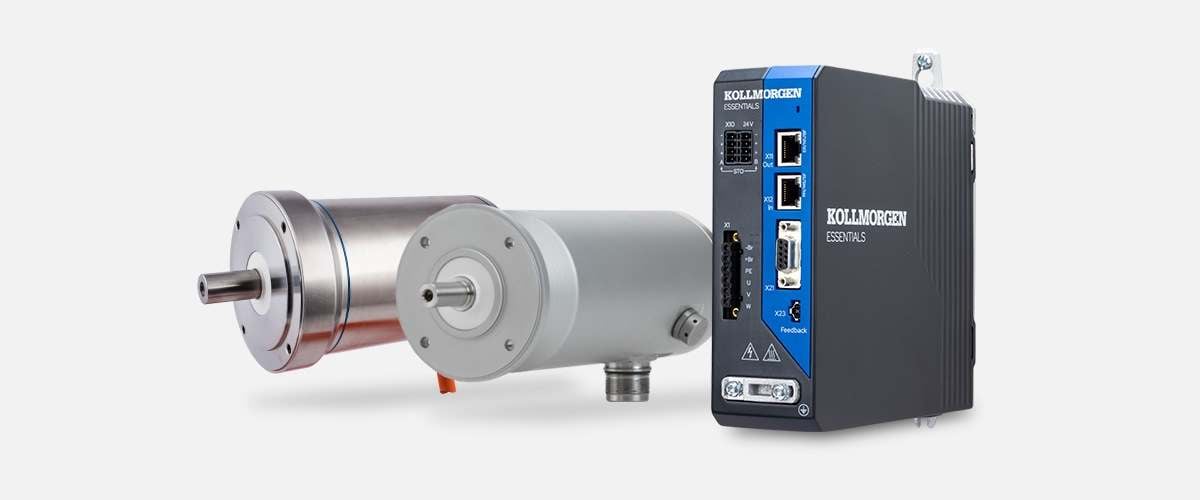
Integration overhead is where multi-axis projects stall. But with a scalable, integrated ecosystem, engineers can combine different performance tiers under a single motion control architecture to simplify integration. For example, value-driven components like the Kollmorgen Essentials™ Motion System combined alongside the high-performance Kollmorgen 2G Motion System can help balance complexity, cost, and precision where needed.
And with a unified controller platform, like the PCMM2G lineup, that same architecture scales without redesign. As production demands evolve, engineers can add axes or expand capability within the same control environment. While the AKD2G servo drive and AKM2G servo motor deliver high-bandwidth control loops for smooth, accurate motion at speed, with fast load-change response built in.
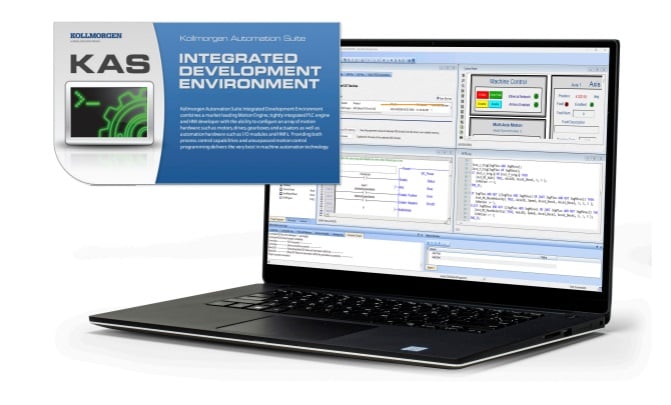
Commissioning follows the same logic. Software environments like the Kollmorgen Automation Suite (KAS) simplify setup and troubleshooting through standardized IEC 61131-3 programming and reusable motion functions. And smart feedback devices enable automatic motor recognition. When connected, the drive instantly recognizes the motor parameters, significantly reducing startup time and debugging effort from day one—keeping operational complexity low long after deployment.
The bottom line on motion management
Consistently managing motion in the production cell requires a holistic, system-level approach that prioritizes synchronization, scalability and long-term usability. As performance targets rise, disconnected components aren't enough. You need a unified architecture designed to handle real-world complexity.
Our motion experts and broad motion control portfolio can help you deliver the performance and scale to keep up with production demands, today and tomorrow.