As food and beverage lines get faster and more varied, secondary packaging grows more complex. Speed increases. Space shrinks. Cleaning becomes critical. Cosmopack builds the machines that perform in this reality.
With more than 5,000 labeling, handling and packaging systems installed worldwide, the company has deep experience across global production lines. For years, it has relied on specialized machines for each packaging format, from cardboard and film to flat or die-cut pads. While that model worked, it limited flexibility and added complexity to production lines. Cosmopack set out to change that and become a custom flexible packaging manufacturer.
“We are extremely satisfied with the collaboration and the Kollmorgen product range, which has demonstrated speed, reliability, and consistent performance. We will certainly consider Kollmorgen’s portfolio for future projects.”
—Eng. Simone Colombarini, CEO

Challenge
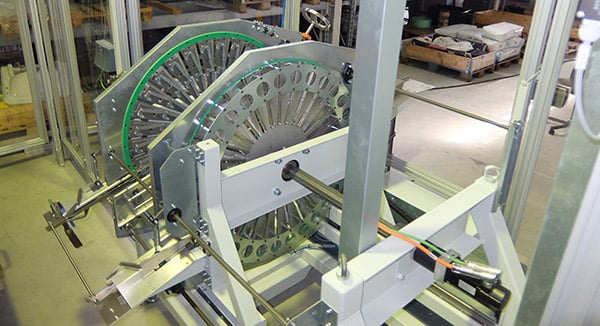
The goal was simple yet ambitious. Have a single architecture that can handle different materials and formats while simplifying automated packaging line integration. This universal COMBI platform would replace older single-purpose models to serve a wider range of customers and products.
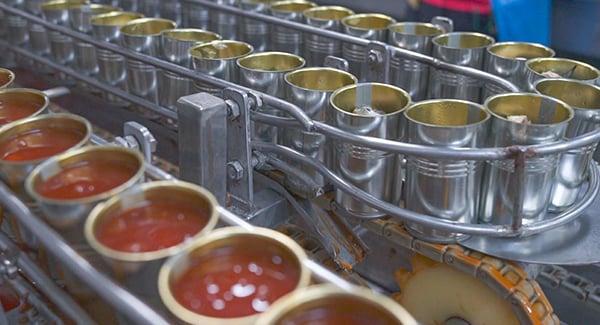
The machines had to fit into compressed food and beverage lines, including applications such as vegetable oils, cheese trays or canned products in oil. These environments demand clean machine edges, simplified cabling and easy washdown access. Optional modules also provided the flexibility to configure machines for different production lines and add later without major redesign. Finally, the electrical cabinet had to shrink while supporting more axes and functionality.
Timing was another constraint. Cosmopack needed a motion architecture that could be commissioned quickly, integrated reliably and reused across multiple machine configurations to keep production lines on tight schedules.
Solution
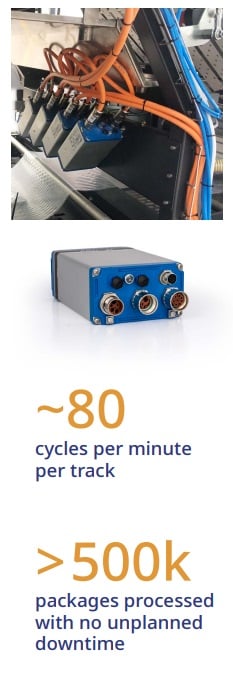
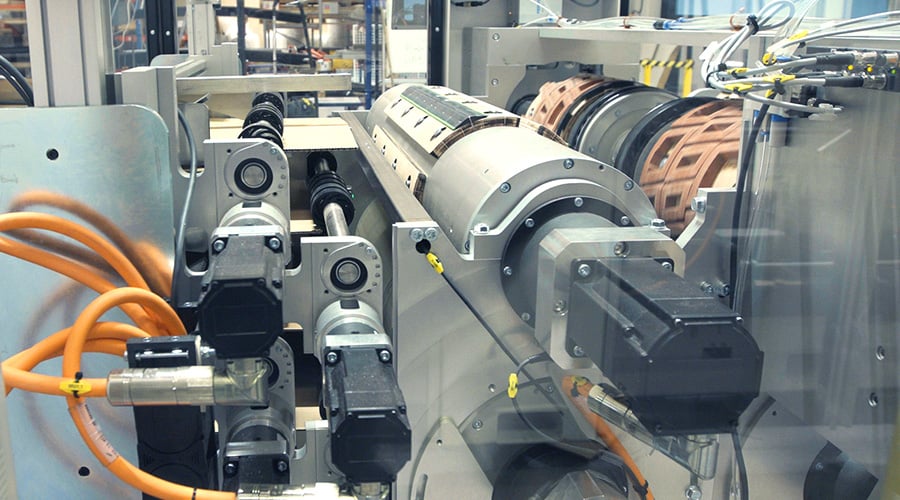
The answer was a decentralized motion architecture built around Kollmorgen’s AKD-N servo drives and AKD-C power supply. By mounting intelligence closer to the motors on the machine and centralizing only the power, the system reduced cabinet size and shortened cable runs. This created cleaner, more organized wiring along the machine perimeter and fewer components inside the control cabinet.
Decentralization also simplified installation and accelerated setup because much of the drive configuration was performed directly at the machine rather than through complex cabinet wiring, reducing time and costs. Automated packaging line integration was faster and more predictable.
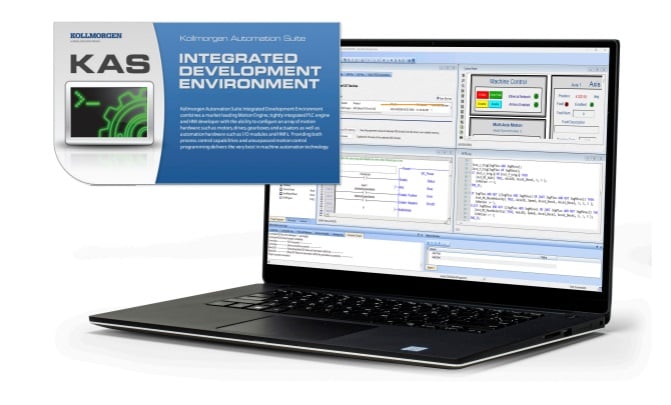
Kollmorgen supported Cosmopack with product training, axis configuration in CODESYS and EtherCAT communication setup. The engineer-to-engineer support helped the first machine reach production faster than previous projects.
Results
The benefits of Kollmorgen’s decentralized motion architecture were proven after the first COMBI installation. Beyond the smaller cabinets, cleaner machine edges and faster startups, commissioning time dropped significantly.
In operation, machines can coordinate up to 30 axes and achieve up to 80 cycles per minute per track, depending on the format. Even during peak season, with machines operating on a three‑shift schedule, the system maintains high performance and smooth, reliable operation—processing more than 500,000 packages with no unplanned downtime.
The real achievement is the flexibility and consistency across packaging styles, from bottles and jars to trays and specialty containers. The flexible packaging system performs reliably with difficult shapes that are common in food and beverage lines, while remaining easy to clean and service.
Building on the success, Cosmopack is adopting the same decentralized motion architecture for a legacy mixer machine and future project designs. More importantly, Cosmopack knows it has a motion platform and partner it can trust to deliver.