blog | Issues to Consider when Operating a Motor in a Vacuum |
|
2 minute read

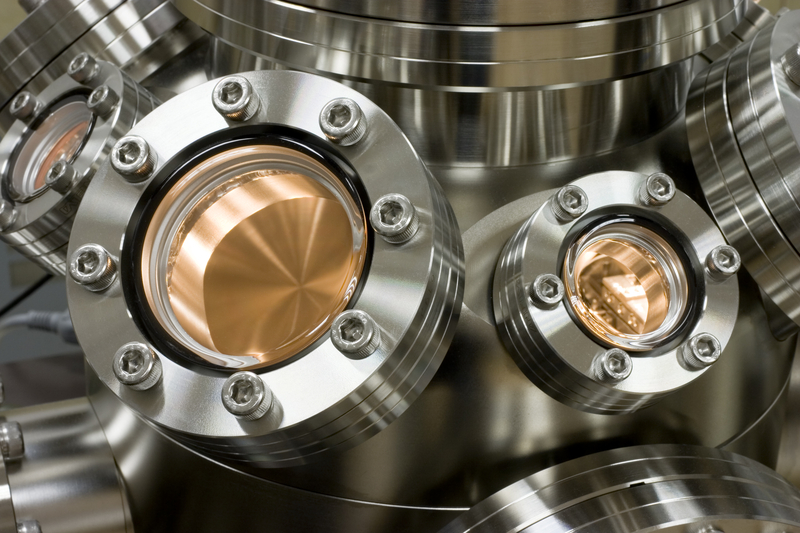
Vacuum ChamberQuestion: I need to operate a servo motor in a vacuum, what are some considerations?

Answer: In a word? Outgassing. You might think that proper motor sizing* is a big issue, it always is, however if you can't conform to the other process requirements, there is no point to attempting to size the motor.

The biggest issue for any given motor selection to be run in a given vacuum for a specific process is the outgassing requirement, or rather, the avoidance of materials that would affect the process being performed and/or the life of the motor.

Understanding the process requirements is the main key: level-of-vacuum, outgassing specifications and limitations, as well as expectations for the application (process and motor life.)

Outgassing example: Teflon lead-wire insulation has low outgassing properties but if used in a radiation environment will not survive as well as some other materials. In such case, Tefzel insulation may be a better material for the application. (It may not be better, you'll need to review its material information and compare it to other products.)

Or you may have bearing grease that has a low outgassing property that is good in a radiation environment, but it is not compatible for a typical semi-conductor manufacturing process.

Utilizing NASA class A requirements is a very good base-line from which to communicate between the OEM, customer, and motor's manufacturer. This standard can set the stage for 'same as except' changes for the individual application.

NASA's standard is: { < 1.0% TML (total mass loss), < 0.1% CVCM (collected volatile condensable materials)}

You will also have to consider all of the other materials and their potential effect on the application in the environment, whether of an organic source or not: varnishes, adhesives, coatings, resins, and solvents.

…..And don't forget the glue holding the nameplate on!

* Oh, and a quick word on motor sizing: In regard to proper motor sizing, calculated RMS torque requirements of the application for normal motor operation in standard atmosphere (like in a manufacturing plant) have been found to require a motor with a capability of 2.6-3 times that calculated RMS torque value when operating in a vacuum. One could compare this with the difference of current carrying capability of copper in normal atmosphere versus the current carrying capability of copper within the application vacuum.

Consult an Expert

AKME Series Servo Motors

AKME Series is built on the AKM platform and designed for use in Zone 2 and Zone 22 environments with ATEX and IECEx global certification.
Learn More

AKMA Servo Motors

The lightweight AKMA servo motor is designed for harsh environments like food and beverage processing, and delivers performance and reliability.
Learn More

Engineer the Exceptional

Learn how to engineer exceptional machines, robots and vehicles with the highest-performing, most reliable motors, drives, automation solutions and more.

Learn More

Related Resources

Kollmorgen HV Essentials

Kollmorgen Introduces New Controller and High-Voltage Capability in its Essentials Portfolio >

Kollmorgen Essentials adds a new eight-axis controller and high-voltage drive capability to right-size motion system builds for industrial applications.
Choosing the Right Motor for HazLoc Machine Needs: Zone 2 and Zone 22 Made Simple

Choosing the Right Motor for HazLoc Machine Needs: Zone 2 and Zone 22 Made Simple >

Introducing Kollmorgen’s AKME servo motors—ATEX/IECEx certified and engineered for compact, versatile performance in hazardous environments where choices have been limited—until now.
Kollmorgen Essentials™: Complete Motion Systems for Every Axis, Every Budget

Kollmorgen Essentials™: Complete Motion Systems for Every Axis, Every Budget >

Discover how Kollmorgen Essentials delivers high‑precision motion and proven reliability—now faster to specify, simpler to integrate, and more affordable to scale. The new Kollmorgen Essentials line introduces complete, pre-engineered motion control…
English, UK
Kollmorgen Essentials™: Sistemas de movimiento completos para cada eje y cada presupuesto (Español)

Kollmorgen Essentials™: Sistemas de movimiento completos para cada eje y cada presupuesto (Español) >

Descubre cómo Kollmorgen Essentials ofrece control de movimiento de alta precisión y fiabilidad comprobada, ahora más rápido de configurar, más fácil de integrar y más rentable de escalar.
Español
Kollmorgen Essentials™: Complete Motion Systems for Every Axis, Every Budget

Kollmorgen Essentials: Complete Motion Systems for Every Axis, Every Budget >

Discover how Kollmorgen Essentials delivers high‑precision motion and proven reliability—now faster to specify, simpler to integrate, and more affordable to scale. The new Kollmorgen Essentials line introduces complete, pre-engineered motion control…
How Kollmorgen Motion System Powers a Cable Robot to Triple Throughput

How Kollmorgen Motion System Powers a Cable Robot to Triple Throughput >

Learn why Rbot9 specified AKM2G servo motors and AKD servo drives to maximize the payload capacity, speed and vertical-load safety of its massive, suspended-cable robot.
Which Servo Position Feedback Device Is Right for Your Application?

Which Servo Position Feedback Device Is Right for Your Application?  >

Choose the right feedback device for your application. Learn how to achieve maximum performance, efficiency and value with a multi-turn absolute rotary encoder.
Kollmorgen’s new SFD-M high-resolution encoder offers multi-turn absolute feedback at zero incremental cost

Kollmorgen’s new SFD-M high-resolution encoder offers multi-turn absolute feedback at zero incremental cost >

Kollmorgen’s battery-free SFD-M encoder provides absolute 16-bit multi-turn positioning data at system power up with zero incremental cost. Eliminate homing sequences and maintain positioning accuracy through 65,536 complete motor revolutions for a…
What are the differences between DC, BLDC and AC servo motors?

What are the differences between DC, BLDC and AC servo motors? >

Understand the differences between DC servo motors, BLDC servo motors and AC servo motors. Selecting the right type for your application is critical for optimal performance, efficiency and longevity.