When a spark ignites volatile gas inside a motor, an explosion proof design contains the internal combustion to prevent a greater explosion or fire. An explosion proof motor is clearly marked with a nameplate that identifies its suitability for a given hazardous environment.
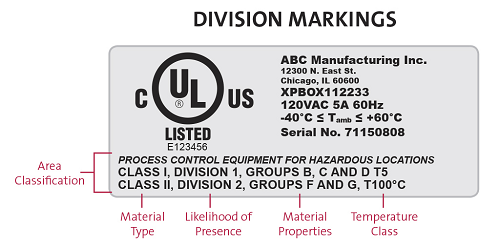
Depending on the agency certifying the motor, the nameplate will clearly indicate the hazardous location Class, Division, and Group for which the motor is suited.
Understand Class, Division, and Group ratings on hazardous motors in each region
The agencies that can certify motors for hazardous duty are UL (United States), ATEX (European Union), and CCC (China). These agencies separate hazardous environments into Class - which defines the hazards that may be present in the environment; Division - which identifies the likelihood of the hazard being present under normal operating conditions; and Group - which identifies the specific materials present.
UL regulations: explosion-proof certification
The UL criteria recognizes three classes of hazards: Flammable gases, vapors or liquids (Class I), combustible dusts (Class II), or ignitable fibers (Class III). Division 1 indicates that hazardous materials are present under normal operating conditions, while Division 2 indicates materials are not likely present under normal conditions. Group will specifically identify the hazardous material present, such as the common Class I materials of Acetylene (A), Hydrogen (B), Ethylene (C), or Propane (D).
Atex regulations: explosion-proof certification
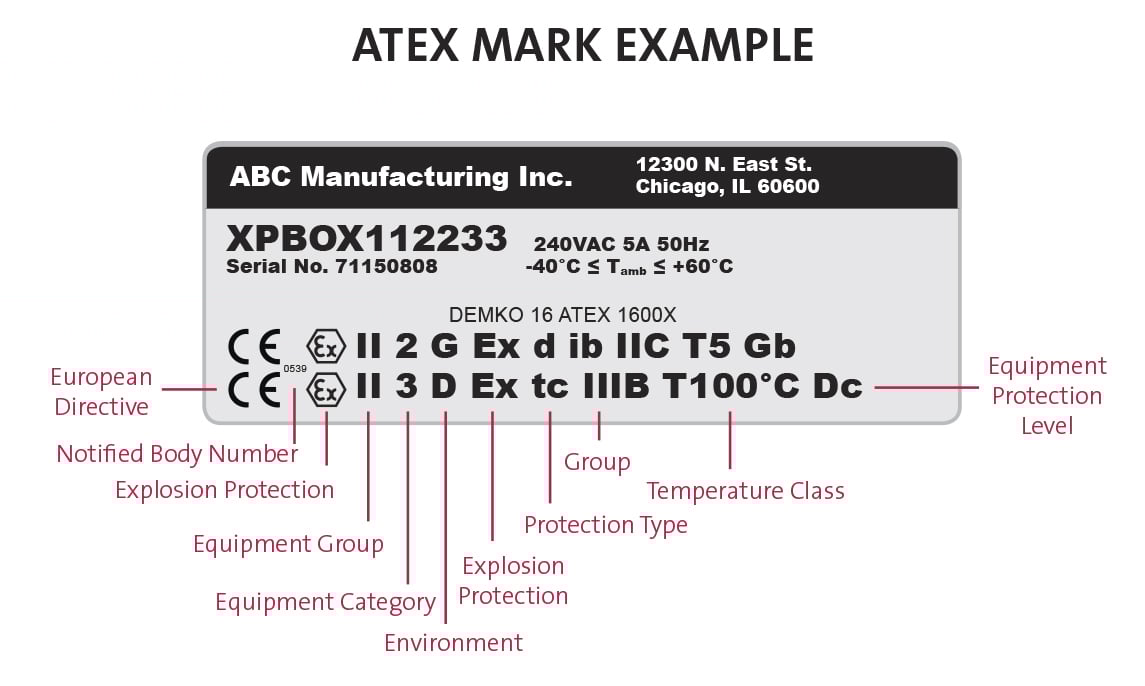
The European Union has similar certification requirements that group the environments into zones. Zones 0, 1, and 2 are designated for gas and vapors, while zones 20, 21, and 22 are designated for dust and fiber. The zone number designates the probability of the material being present during normal operation with zone 0 and 20 at very high, 1 and 21 at high and normal, and 2 and 22 at low.
As of October 2020, China requires motors that operate in hazardous environments to have CCC certification. To obtain certification, the product is tested by a certified testing organization to the specific requirements designated by the Chinese government.
Match the motor rating to the exact hazardous environment
It is important to check the motor nameplate for the specific requirements, hazards present, and other environmental considerations to determine the explosion proof motor fit. The explosion proof designation indicates the types of hazards that suit that specific motor. Using an explosion proof motor in a hazardous environment in which it is not specifically rated can be dangerous.