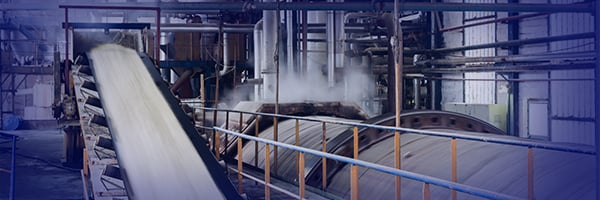
Hazardous location facility

Hazardous locations introduce a unique motor design challenge. Engineers must meet strict safety and regulatory requirements without adding unnecessary size, cost or complexity. This white paper provides a structured approach to motor selection for UL, ATEX and IECEx environments.

Learn how to classify environmental risk, match protection concepts to application needs, and specify motors that achieve both safety and performance in industrial automation systems.
Fill out this short form

to view this White Paper

-OR-

Login / Register

to gain access to Kollmorgen content

Privacy Statement - By sending us your contact details you agree that your personal data/user behavior can be electronically stored and processed. If you no longer wish to receive the enewsletter, you can unsubscribe at any time.

CAPTCHA

AKME Series Servo Motors

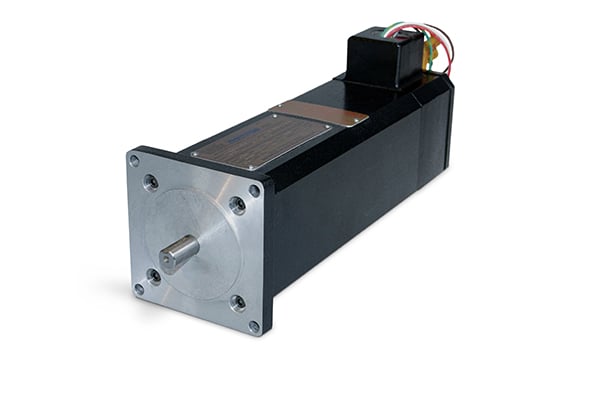
AKME Series is built on the AKM platform and designed for use in Zone 2 and Zone 22 environments with ATEX and IECEx global certification.
Learn More

Goldline B/M & BH/MH Series

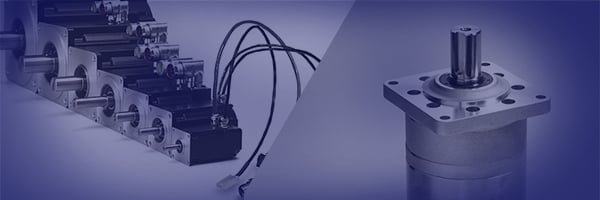
The B and M Series are low- and medium-inertia motors that run on 230 VAC line power. The BH and MH Series provide similar features and performance at 400/480 VAC.

Learn More

Engineer the Exceptional

Learn how to engineer exceptional machines, robots and vehicles with the highest-performing, most reliable motors, drives, automation solutions and more.

Learn More

Related Resources

Explosion-proof technology helps create a safety shield for heavy-duty AGVs 

Explosion-proof technology helps create a safety shield for heavy-duty AGVs >

The AKME servo motor series with ATEX certification enables heavy-duty AGV development for hazardous locations in chemical, painting, polishing and specialized facilities.
Which Motor Should You Choose for Your Hazardous Location Application?

AKME vs. Goldline: Which Motor Should You Choose for Your Hazardous Location Application?  >

The new AKME Series for hazardous locations brings ATEX and IECEx certifications, unprecedented compactness and versatility. Compare AKME against Goldline EB.
Choosing the Right Motor for HazLoc Machine Needs: Zone 2 and Zone 22 Made Simple

Choosing the Right Motor for HazLoc Machine Needs: Zone 2 and Zone 22 Made Simple >

Introducing Kollmorgen’s AKME servo motors—ATEX/IECEx certified and engineered for compact, versatile performance in hazardous environments where choices have been limited—until now.

AKME Series Servo Motor Catalog >

AKME servo motors are built on the proven performance of the AKM servo motor platform, with additional design features to achieve ATEX and IECEx certification for operation in gas Zone 2 and dust Zone 22 hazardous locations. To suit a wide range of…
Wastewater treatment plant with submersible motors 

Goldline-S Submersible Motor Data Sheet >

Get reliable motion for exceptional control in underwater applications, even at depths up to 20,000 feet under the ocean. Goldline-S submersible servo motors feature pressure-compensated technology and specialized materials for trusted performance. 
Explosion Proof Motor Brochure

Explosion Proof Motor Brochure >

Finding motors that meet your performance specifications — and certified for hazardous-location use in your region — can be a challenge. Discover Kollmorgen’s wide selection of UL, ATEX and IECEx certified explosion proof servo motors.

How to Customize a Servo Motor - Standard vs Custom >

When and how to customize a standard servo motor depends on the predicted benefits derived from the customization that should include a solution tied to form, fit, and function. Learn more.

How do I know if my motor is explosion proof? >

An explosion proof motor is clearly marked with a nameplate that identifies its suitability for a given hazardous environment.  The nameplate will indicate the hazardous Class, Division, and Group for which the motor is suited.

Why use explosion proof motors? >

Electric motors generate heat under normal operating conditions and have the potential to generate a spark if a motor coil fails. Excessive motor case temperatures or a spark that is not properly contained can cause an explosion or ignite a fire in…