A slotless motor is a brushless motor whose stator has no steel teeth. Instead, copper windings are encapsulated in the air gap between stacked steel rings and the rotor magnets. This eliminates cogging torque but reduces torque per volume compared to conventional slotted brushless motors.
Does that make slotless motors the better choice for applications like EO/IR (Electro-Optical/Infrared) systems? Not necessarily. While slotless motors eliminate cogging torque, conventional slotted motors deliver significantly higher torque density and can achieve smooth motion through thoughtful motor design and advanced control techniques. Understanding the tradeoffs between these two brushless motor technologies is the key to selecting the right motor for any demanding low-speed, high-torque applications.
Key takeaways
- Slotted and slotless brushless motors differ primarily in stator design, which affects torque density, cogging torque and torque ripple.
- Conventional slotted motors deliver higher torque per volume, making them a strong choice for low-speed, high-torque applications such as dynamic EO/IR systems.
- All motors, including slotless designs, exhibit torque ripple in the energized state. Eliminating cogging torque alone does not eliminate the ripple.
- Motor selection should consider the complete motion system. Motor design, feedback and control can mitigate torque ripple, making torque per volume a key selection criterion.
What is the difference between slotless and slotted brushless Motors?
The primary difference between slotted and slotless brushless motors is the design of the stator. While both use permanent magnets on the rotor and electronic commutation to generate motion, their stator construction affects torque output, cogging behavior and application fit.
What is a conventional brushless motor?
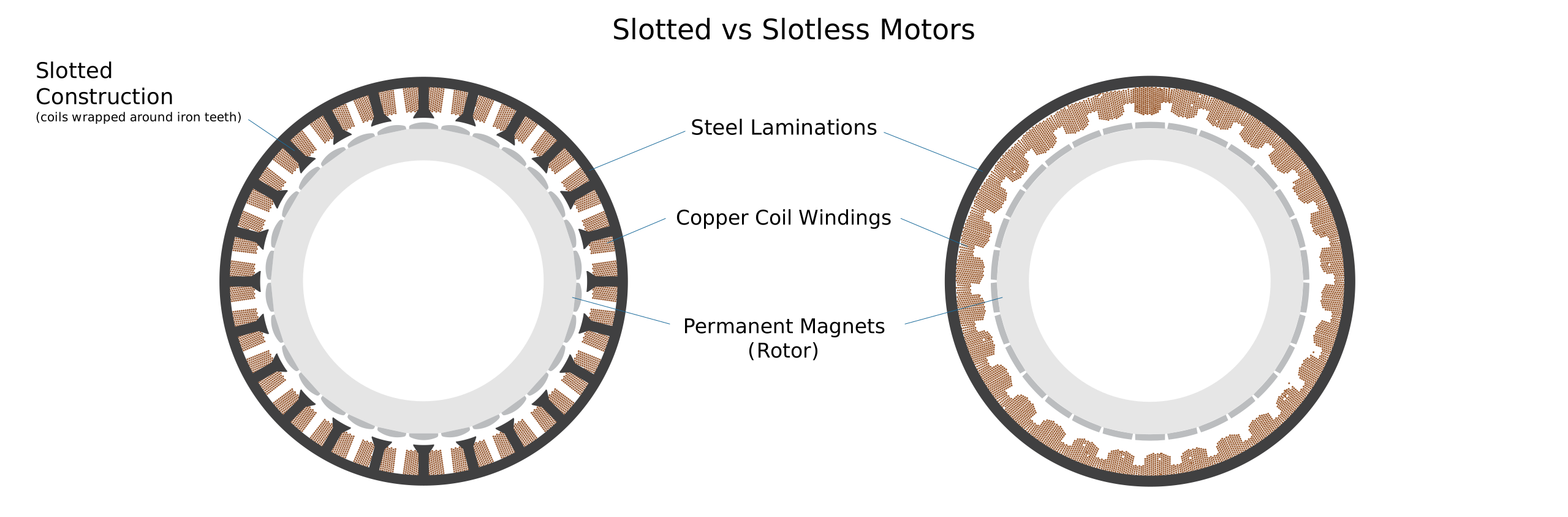
In a conventional brushless motor, also called a slotted motor, slotted steel laminations are stacked together with copper windings inserted into these slots. The tooth structure focuses electromagnetic flux toward the rotor magnets, concentrating energy more efficiently than a slotless design.
This concentrated magnetic flux enables conventional motors to deliver higher torque density and greater torque output for a given motor size. The tradeoff is the presence of cogging torque, which can affect low-speed motion if not addressed through motor design.
What is a slotless brushless motor?
In a slotless motor, the stator lamination is constructed of steel rings stacked together with copper coils mounted to them and then encapsulated, positioning the coils in the air gap between the stator and rotor magnets. This eliminates the steel teeth that cause cogging torque but introduces a larger effective air gap, which limits torque production.
The result is a motor that offers smooth no-load rotation and predictable torque control suited to low-weight, stable-condition applications.
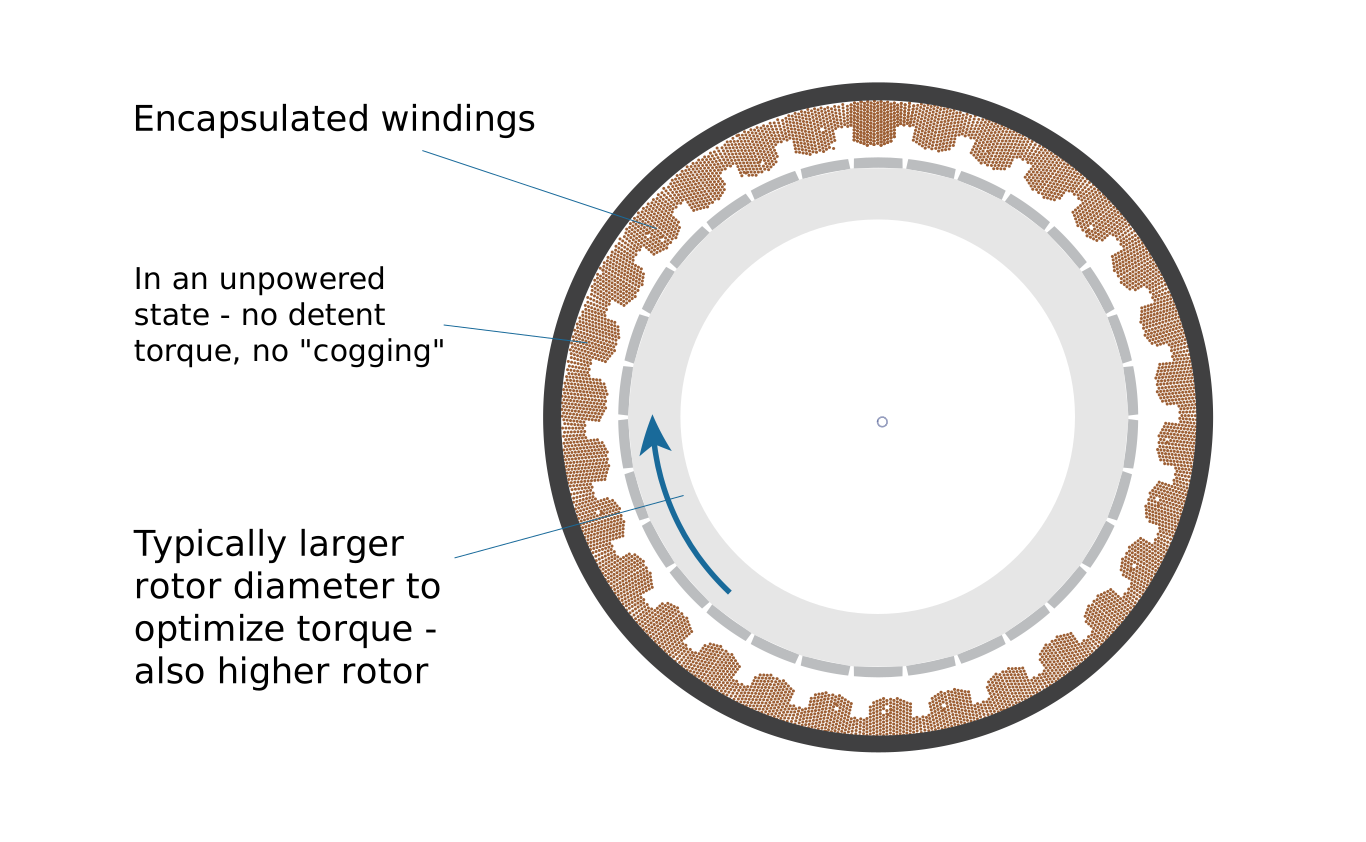
How do conventional slotted and slotless motors compare?
| Characteristic | Conventional (Slotted) Motor | Slotless Motor |
|---|---|---|
| Cogging Torque | Present (reducible by design) | None |
| Torque Ripple (energized) | Present | Present |
| Torque per Volume | High | Lower |
| Air Gap | Smaller | Larger |
| Armature Reaction at High Current | Lower | Higher |
What are the performance tradeoffs between conventional slotted and slotless motors?
Many motion applications require smooth, precise performance while delivering high torque in a compact package. EO/IR systems are a good example. These systems must maintain stable, accurate movement while compensating for road shock, air turbulence, vibration and other environmental forces.
To understand how conventional and slotless brushless motors perform in EO/IR and other low-speed, high-torque servo applications, it's important to understand two key performance characteristics: cogging torque and torque ripple.
What causes cogging torque in brushless motors and can it be eliminated?
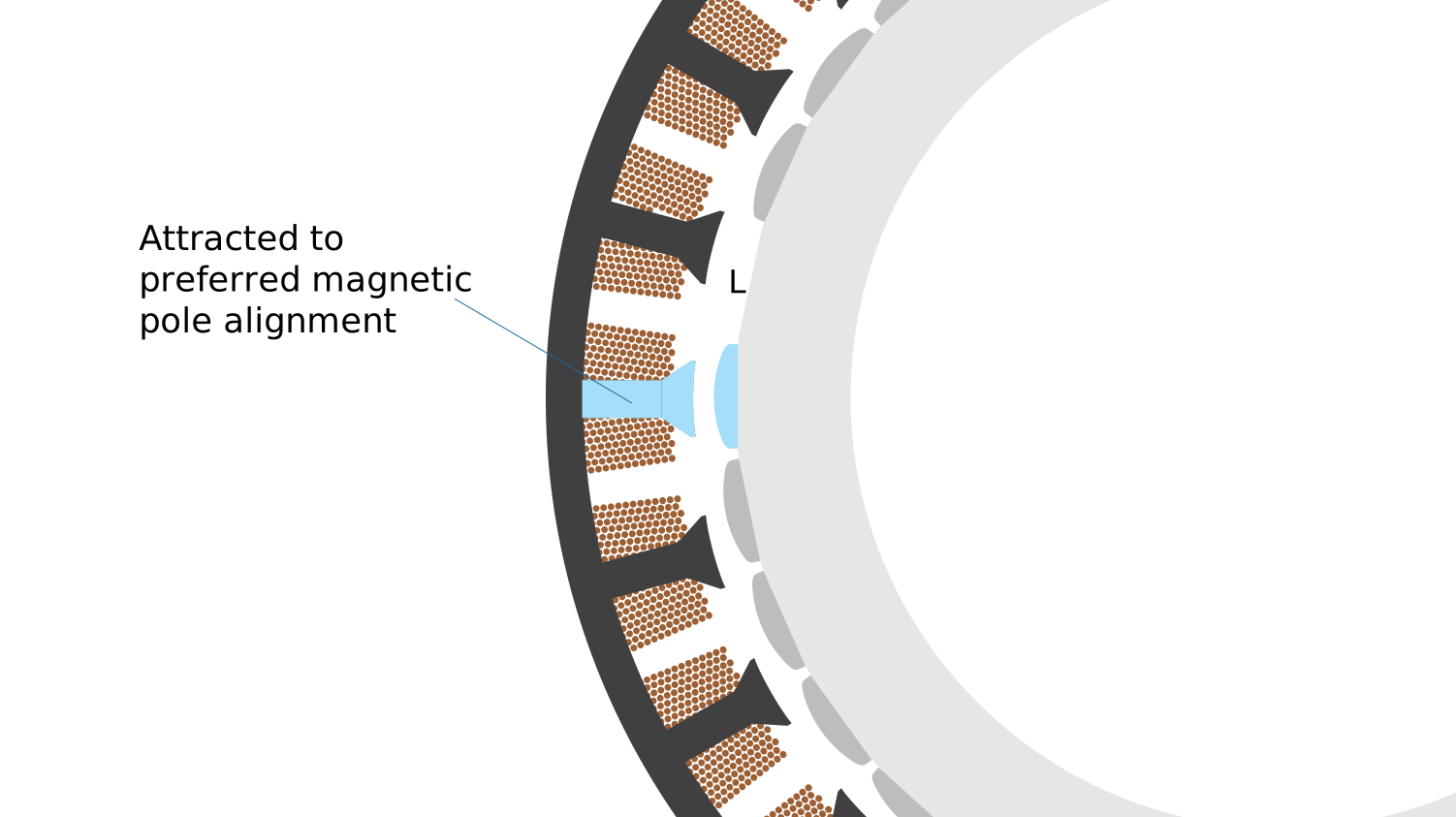
Cogging torque in conventional brushless motors is caused by the attraction between permanent magnets mounted on the rotor and the steel teeth of the stator laminations. In the unenergized state, this attraction creates an intermittent "jerking" sensation when the shaft is rotated by hand.
Slotless motors do not exhibit this property because there are no teeth in the stator lamination. The rotor can rotate freely since the permanent magnets are not attracted to the nonmagnetic stator coils. However, eliminating cogging torque entirely through a slotless design is not the only approach—nor is it the best one for many applications.
At Kollmorgen, our motion experts help substantially reduce cogging torque in conventional motors through targeted design choices. These include:
- Slot/pole combination selection: Choosing the right ratio minimizes cogging at the design stage
- Winding configuration: Needle winding or hand winding with varying slot fill factors influence cogging behavior
- Pole span and magnet shaping: Adjusting magnet width and profile reduces cogging-related harmonics
- Slot opening and tooth tip design: Geometric modifications reduce the amplitude of cogging cycles
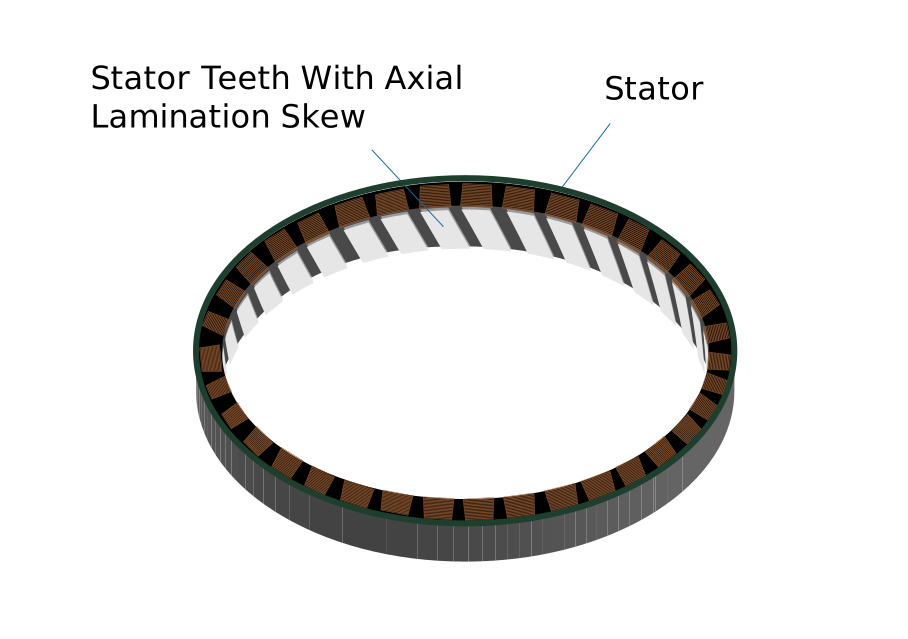
- Stacking skew: Stacking skew can achieve up to 90% reduction of cogging torque in conventional motors
These techniques tend to reduce torque and torque density to varying degrees, but they allow conventional motors to maintain their torque-per-volume advantage while significantly mitigating the primary objection raised against their use in smooth-motion applications.
How does torque ripple affect servo motor performance?
Torque ripple is uneven torque production throughout rotor rotation in an energized motor. It’s the performance characteristic that most directly affects smooth motion in EO/IR systems. Unlike cogging torque, which occurs because of the interaction between rotor magnets and stator teeth, torque ripple is caused primarily by variances in electromagnetic fields as the rotor and stator interact. It affects both conventional and slotless brushless motors.
In slotless motors, armature reaction can become a significant contributor to torque ripple at medium-to-peak current levels. As current rises, the armature field can distort the magnetic flux distribution, increasing harmonic content in the motor's electromagnetic waveforms and contributing to torque ripple. While conventional slotted motors can experience similar effects, they typically exhibit less armature reaction as current rises, which can help reduce load-dependent torque ripple.
For EO/IR gimbals that must acquire and maintain a steady image while counteracting vehicle vibration, road shock, and air turbulence, torque ripple directly compromises the quality of visual data and can affect targeting accuracy and operator safety. This is why motor selection for demanding EO/IR applications can't be based on cogging torque alone. Kollmorgen prioritizes torque per volume alongside the system's ability to control torque ripple under load.
How can torque ripple be minimized in conventional brushless motor systems?
Torque ripple in conventional brushless motor systems can be substantially reduced through a combination of motor design modifications and advanced control system techniques. On the design side, methods such as stacking skew and optimized slot/pole combinations help minimize cogging torque.
On the control side, Kollmorgen engineers apply high-resolution feedback, high-bandwidth control loops, and load-disturbance-canceling drive algorithms. A high-resolution feedback signal of the torque or force being applied to the load can be brought to a summation point with the drive's command signal, effectively canceling the effects of torque ripple—like the 180° phase-reversal technique used in noise-canceling headphones. When the velocity loop bandwidth is high enough to dominate the primary contributors to torque ripple, cogging torque has no meaningful effect on load behavior, and velocity ripple can be almost completely rejected.
Together, these techniques enable smooth, stable low-speed motion while preserving the torque density advantage of conventional slotted motors.
Verdict: best motor Type for low-speed, high-torque applications?
A conventional slotted brushless motor is often the best choice for low-speed, high-torque applications, such as EO/IR systems operating at relatively low speeds below 1,000 rpm. It delivers higher available peak and continuous torque per volume than a slotless motor of similar size. This torque advantage is decisive in EO/IR systems, where gimbals must respond quickly to relatively massive inertial forces while maintaining platform stability.
Slotless motors remain an excellent choice for low-weight, low-torque and stable-condition applications, but they generally do not provide the torque density required for aggressive, highly dynamic motion. As a result, if your requirement is “best servo motor for low-speed high-torque applications,” then torque density (and the ability to control ripple) tends to favor a conventional permanent magnet motor with a slotted lamination design.
If you’re evaluating slotless and conventional motors for a low-speed, high-torque applications, consult a Kollmorgen expert to review torque-density targets, disturbance conditions and control strategy so the motor and drive are specified as complete systems.
Frequently Asked Questions
When should you use a slotless motor instead of a conventional slotted motor?
Use a slotless motors for low-weight, low-torque and stable-condition applications where smooth no-load rotation is a priority and dynamic torque demands are modest. Use a conventional slotted motor when you need higher torque per volume and high responsiveness, such as many low-speed EO/IR gimbals. This slotted vs slotless motor decision should be made in the context of the whole servo system.
Are slotless motors better than conventional brushless motors for EO/IR systems?
Conventional slotted brushless motors are often preferred for EO/IR systems that require high torque and smooth motion at low speed because of torque per volume advantages. Torque ripple still must be addressed, but higher torque density improves disturbance rejection and responsiveness. Slotless designs can be a fit for lower-torque, more stable EO/IR conditions.
Do slotless motors have torque ripple?
Torque ripple occurs in energized operation and affects brushless motor types including slotless designs. Even without cogging torque, electromagnetic interactions still vary through rotation and can introduce ripple. Managing ripple typically requires high-resolution feedback and advanced drive control.